

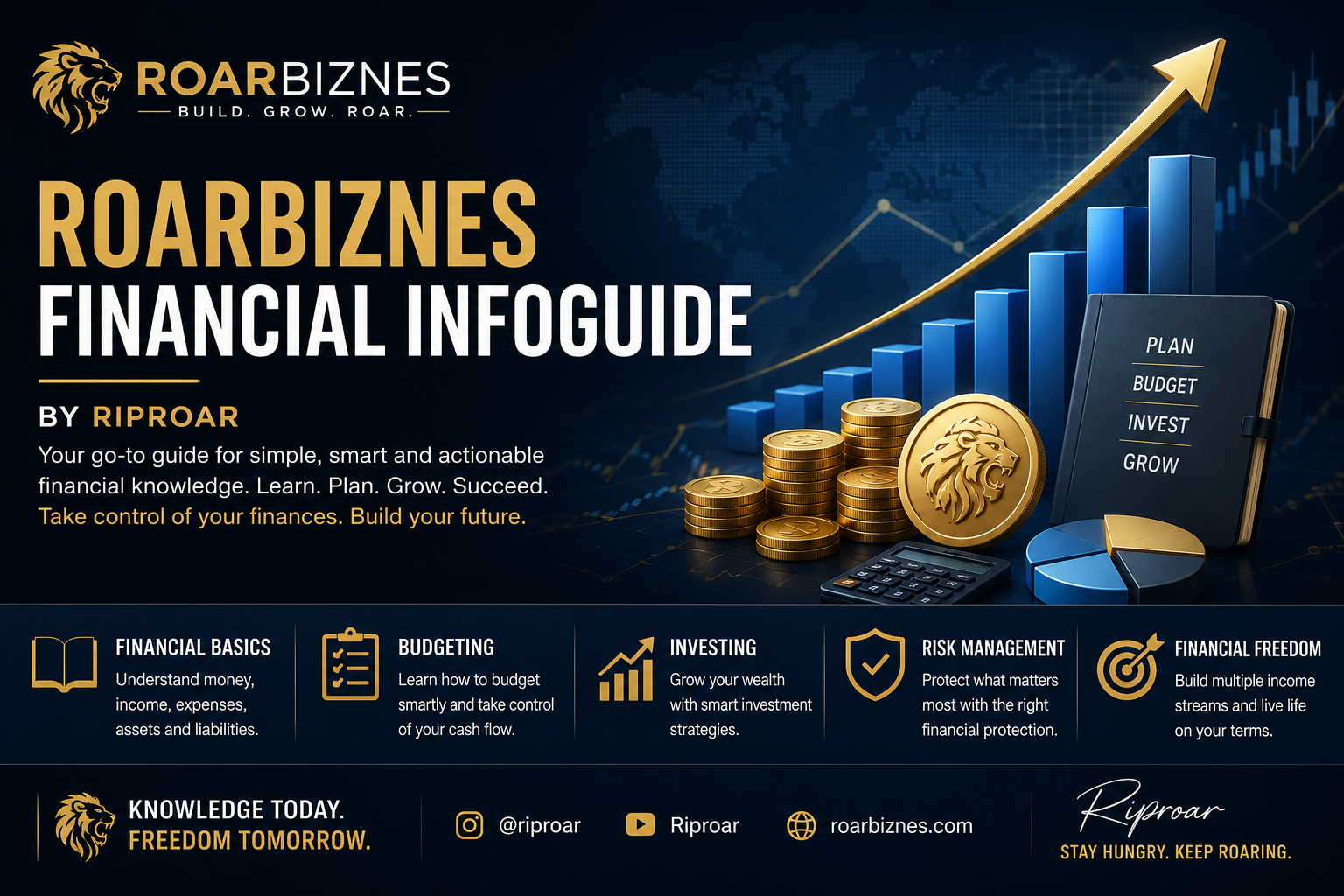
In today’s fast-changing business environment, financial literacy is no longer reserved for accountants, analysts, or corporate executives. Entrepreneurs, startup founders, freelancers, investors, and business managers all need reliable financial insights to make informed decisions. This is where roarbiznes financial infoguide by riproar has emerged as a valuable concept for individuals seeking practical, understandable, and actionable financial knowledge.
Whether the goal is managing cash flow, improving profitability, understanding investment opportunities, or creating long-term business resilience, modern financial guidance must balance simplicity with strategic depth. The growing interest in roarbiznes financial infoguide by riproar reflects a broader demand for accessible business intelligence that helps organizations navigate uncertainty while identifying growth opportunities.
This comprehensive guide explores the principles, applications, benefits, and strategic value associated with business financial education, helping readers understand why structured financial information remains one of the most important competitive advantages in today’s economy.
Understanding the Purpose of Roarbiznes Financial Infoguide by Riproar
At its core, roarbiznes financial infoguide by riproar represents a structured approach to financial education, business intelligence, and decision support. Rather than overwhelming readers with technical jargon, it focuses on translating complex financial concepts into practical knowledge that businesses can immediately apply.
The growing popularity of financial guides reflects a major shift in how organizations approach planning and management. Leaders increasingly recognize that strong financial understanding is not merely a support function but a central driver of sustainable growth, operational efficiency, and long-term competitiveness.
Why Financial Knowledge Matters More Than Ever
The modern economy is characterized by rapid technological innovation, changing consumer behavior, global competition, and evolving regulatory requirements. Businesses that lack financial awareness often struggle to adapt when market conditions change unexpectedly.
Financial knowledge enables decision-makers to evaluate opportunities objectively, manage resources effectively, and reduce unnecessary risks. When organizations develop a stronger understanding of budgeting, forecasting, profitability, and capital allocation, they create a foundation for smarter strategic planning and improved performance.
The Evolution of Business Financial Guidance
Traditional financial education often relied on lengthy reports, academic resources, and specialized consulting services. While valuable, these resources were frequently inaccessible to small business owners or professionals without formal financial training.
Modern business guides focus on usability and clarity. The principles associated with roarbiznes financial infoguide by riproar align with this evolution by emphasizing practical applications, simplified explanations, and actionable insights that support everyday decision-making across various industries.
Core Components of Effective Financial Intelligence
Financial intelligence extends beyond understanding income and expenses. It encompasses a broader framework that includes performance measurement, strategic planning, risk evaluation, and resource optimization.
Organizations that develop financial intelligence gain a clearer picture of operational efficiency, growth potential, and long-term sustainability. This broader perspective helps leaders move beyond short-term thinking and focus on creating lasting value for customers, stakeholders, and investors.
Essential Financial Areas Every Business Should Understand
Several financial disciplines consistently influence business success. These areas form the foundation of effective management and informed decision-making.
| Financial Area | Primary Focus | Business Benefit |
| Cash Flow Management | Tracking money movement | Improved liquidity and stability |
| Budgeting | Resource allocation | Better spending control |
| Financial Forecasting | Predicting future performance | Enhanced planning accuracy |
| Risk Management | Identifying vulnerabilities | Reduced exposure to losses |
| Investment Analysis | Evaluating opportunities | Higher return potential |
| Profitability Analysis | Measuring earnings efficiency | Improved operational performance |
| Debt Management | Managing liabilities | Stronger financial health |
| Strategic Planning | Long-term growth direction | Sustainable business expansion |
This framework illustrates why comprehensive financial education remains essential for organizations of all sizes. Understanding how these areas interact creates stronger and more resilient businesses.
Cash Flow as the Lifeblood of Business Operations
Many profitable businesses still encounter financial difficulties due to inadequate cash flow management. Revenue alone does not guarantee stability if incoming funds fail to align with operational expenses and obligations.
Strong cash flow management allows businesses to maintain operations, seize growth opportunities, and withstand economic disruptions. Leaders who understand cash movement gain greater confidence when making hiring, investment, and expansion decisions.
The Role of Budgeting in Sustainable Growth
Budgeting serves as a roadmap that guides financial activity toward organizational goals. Effective budgets create accountability while ensuring resources are allocated strategically rather than reactively.
Within the broader context of roarbiznes financial infoguide by riproar, budgeting is viewed not as a restrictive exercise but as a proactive planning tool that supports innovation, efficiency, and long-term sustainability.
Financial Forecasting and Future Readiness
Forecasting helps organizations anticipate future outcomes based on historical performance, market trends, and strategic objectives. While forecasts are never perfectly accurate, they provide valuable direction for planning and resource allocation.
Businesses that regularly update financial projections can respond more quickly to changing conditions. This flexibility often becomes a significant competitive advantage in uncertain economic environments.
Understanding Business Risk and Financial Resilience
Every organization faces risks ranging from economic downturns and supply chain disruptions to cybersecurity threats and regulatory changes. Effective financial planning requires proactive risk identification and mitigation strategies.
Resilient organizations prepare for uncertainty before challenges arise. They maintain emergency reserves, diversify revenue streams, and continuously monitor financial indicators that signal potential vulnerabilities.
Strategic Decision-Making Through Financial Data
Data-driven decision-making has become a defining characteristic of successful organizations. Financial metrics provide objective insights that help leaders evaluate performance and identify areas for improvement.
The philosophy behind roarbiznes financial infoguide by riproar aligns closely with this principle by encouraging businesses to use financial information as a strategic asset rather than viewing it solely as a reporting requirement.
Profitability Versus Revenue: A Common Misconception
Many business owners focus heavily on increasing sales while paying insufficient attention to profitability. Revenue growth can create the illusion of success even when operating margins remain weak.
Sustainable businesses prioritize profitability alongside revenue generation. Understanding costs, pricing strategies, and operational efficiency ensures that growth contributes meaningfully to long-term financial health.
Financial Literacy for Entrepreneurs and Startups
Entrepreneurs frequently excel in product development, marketing, or customer service but may have limited financial training. This knowledge gap can hinder growth and increase vulnerability to avoidable mistakes.
Accessible financial education empowers entrepreneurs to make informed decisions regarding funding, pricing, scaling, hiring, and investment. Strong financial literacy often distinguishes businesses that thrive from those that struggle during periods of growth.
The Impact of Technology on Financial Management
Digital transformation has fundamentally changed how organizations manage finances. Cloud accounting platforms, automation tools, artificial intelligence, and analytics solutions have improved efficiency and visibility.
Businesses can now access real-time financial data, automate repetitive processes, and generate sophisticated reports with minimal manual effort. These innovations allow leaders to focus more on strategy and less on administrative tasks.
Investment Evaluation and Capital Allocation
Every business faces decisions regarding where to invest limited resources. Whether purchasing equipment, expanding operations, launching new products, or entering new markets, investment decisions require careful analysis.
A structured financial framework helps organizations compare opportunities objectively. By evaluating expected returns, risks, and strategic alignment, businesses can allocate capital more effectively and maximize value creation.
Building Long-Term Financial Sustainability
Financial sustainability extends beyond short-term profitability. It involves creating systems, processes, and strategies that support consistent growth while maintaining stability during challenging periods.
Organizations that prioritize sustainability often focus on diversified revenue, disciplined spending, strategic investment, and continuous improvement. These principles contribute to stronger financial performance over time.
Financial Transparency and Organizational Trust
Transparency strengthens relationships with employees, investors, customers, and stakeholders. When organizations communicate financial performance clearly and honestly, they build credibility and confidence.
Trust plays a crucial role in attracting investment, retaining talent, and maintaining customer loyalty. Strong financial communication supports healthier relationships throughout the business ecosystem.
Lessons from Successful Organizations
Many high-performing companies share common financial characteristics. They monitor key performance indicators, maintain disciplined budgeting practices, and align financial decisions with long-term objectives.
As management expert Peter Drucker famously noted, “What gets measured gets managed.” This principle remains highly relevant because organizations that consistently measure financial performance are better positioned to improve outcomes.
Financial Metrics That Matter Most
While businesses track numerous indicators, a few core metrics provide particularly valuable insights. These include cash flow, gross margin, net profit margin, operating expenses, customer acquisition cost, and return on investment.
Understanding these metrics enables leaders to identify trends, uncover inefficiencies, and make informed strategic decisions. Consistent monitoring supports continuous improvement and stronger overall performance.
The Growing Importance of Financial Education
As business environments become increasingly complex, financial education continues to gain importance across industries. Employees at all levels benefit from understanding how financial decisions affect organizational outcomes.
The educational focus reflected in roarbiznes financial infoguide by riproar supports a culture of informed decision-making, accountability, and strategic thinking that can strengthen organizational performance over the long term.
How Businesses Can Apply Financial Insights Effectively
Knowledge alone does not create results; implementation is equally important. Organizations achieve the greatest value when financial insights are integrated into daily operations and strategic planning processes.
Practical application includes reviewing performance regularly, setting measurable goals, monitoring progress, and adjusting strategies based on emerging data. This disciplined approach transforms financial information into meaningful business outcomes.
The Future of Financial Intelligence
Emerging technologies, predictive analytics, and artificial intelligence are reshaping financial management. Organizations now have access to deeper insights and more sophisticated forecasting capabilities than ever before.
As these technologies continue to evolve, financial literacy will remain essential. Tools can provide data, but informed decision-makers are still required to interpret information, evaluate trade-offs, and establish strategic direction.
Conclusion
The increasing relevance of roarbiznes financial infoguide by riproar reflects a broader recognition that financial knowledge is a critical business asset. Organizations that invest in understanding cash flow, budgeting, forecasting, profitability, risk management, and strategic planning position themselves for greater resilience and sustainable growth.
In a world defined by constant change, strong financial intelligence provides clarity amid uncertainty. Whether you are an entrepreneur launching a startup, a manager overseeing operations, or a business leader pursuing expansion, developing financial expertise can significantly improve decision-making and long-term outcomes. By embracing the principles associated with roarbiznes financial infoguide by riproar, businesses can build stronger foundations, identify opportunities more effectively, and navigate challenges with greater confidence.
FAQ
What is roarbiznes financial infoguide by riproar?
Roarbiznes financial infoguide by riproar is a concept centered on accessible financial education, business intelligence, and practical guidance that helps organizations make informed financial decisions.
Why is financial literacy important for business owners?
Financial literacy helps business owners understand cash flow, budgeting, profitability, and risk management, leading to stronger decision-making and improved business performance.
How does roarbiznes financial infoguide by riproar support business growth?
The roarbiznes financial infoguide by riproar approach emphasizes practical financial knowledge that can improve planning, resource allocation, forecasting, and long-term strategic development.
What financial metrics should businesses monitor regularly?
Businesses should track cash flow, profit margins, operating expenses, return on investment, customer acquisition costs, and revenue trends to maintain financial health.
Can small businesses benefit from structured financial guidance?
Yes, small businesses often benefit significantly because structured financial guidance helps improve budgeting, planning, investment decisions, and overall financial stability.
How does technology influence modern financial management?
Technology improves financial visibility through automation, analytics, forecasting tools, and real-time reporting, enabling faster and more accurate business decisions.
Is roarbiznes financial infoguide by riproar relevant for startups?
Yes, roarbiznes financial infoguide by riproar can be particularly valuable for startups because it promotes financial literacy, strategic planning, and sustainable growth practices during critical early stages.
You May Also Read: Connections Hint Forbes